AI that does a concrete job
Not a chatbot on your website that can't answer a second question. Automation connected to your process that takes over work a person does by hand today.
Who it's for
For companies where someone does the same thing every day. Retyping orders, sorting inquiries, pulling data from invoices, answering the same questions.
What we do
- We pick a process where it makes sense. Not everything is worth automating. We look for the spot with the best ratio of benefit to risk.
- We build a pilot. On one process, with measurement. So we can tell whether it works before investing more.
- We connect it to your systems. CRM, ERP, e-shop, internal tools.
- We build it on whatever fits. Simple process automation runs on n8n or Make and is done in days. When you need an agent that makes decisions and works with your documents, we write it — the tool follows the task, not the other way round.
- We handle security. Who has access to what, what gets logged, where the data lives and what happens to it. This is the part most quick solutions skip.
- We scale what proves itself. And switch off what doesn't.
How we measure it
Hours saved, error rate, processing time and return. If it can't be measured, it's a toy, not a system.
What we wrote about it.
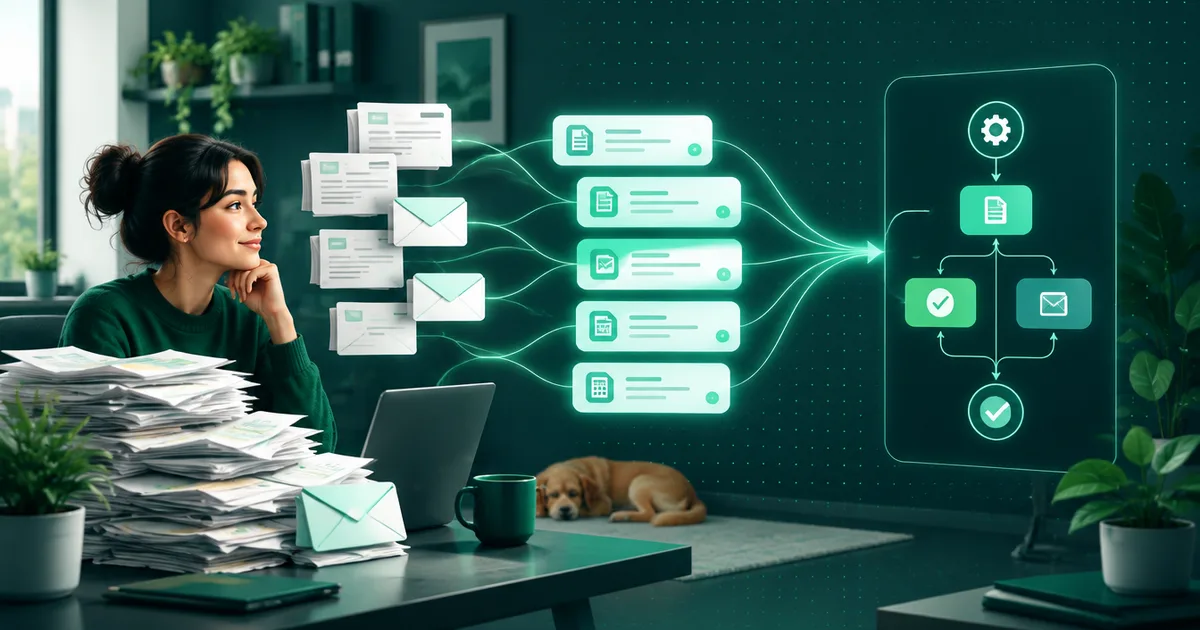
AI automation for small and medium-sized businesses: from analysis to pilot
A small business doesn't need an "AI strategy", but one process that stops taking up hours. How process analysis works, what a fixed-price pilot should include, what it costs and what to ask the vendor.

Artificial intelligence for business: what to actually use it for
Artificial intelligence makes sense in a company where the same work with clear rules repeats every day: invoices, orders, customer questions and moving data between systems. It isn't suited to decisions about people or legal judgment.

AI in accounting: what it can handle and what stays with the accountant
AI in accounting prepares the groundwork: it extracts data from documents, matches payments and sorts clients' mail. Tax judgement and responsibility stay with the accountant.

AI in a municipal office: where it helps and where it does not
AI can take the load off the registry, supplier invoices and answers to citizens' routine questions. Decisions in proceedings and official acts stay with the clerk.

AI in HR and recruitment: what may be automated and what may not
The European AI Act classifies systems for recruiting and selecting people as high-risk. The administration around recruitment can be automated without AI deciding about people. What is what, and where a person stays.
AI automation vs. RPA: what's the difference
RPA repeats precisely defined steps on an existing interface according to fixed rules. AI automation also understands unstructured input and makes decisions in exceptions. The choice depends on the process, not on fashion.
How automated invoice processing works
OCR reads the text of the invoice and a language model extracts the amount, supplier and line items from it. A person reviews the exceptions, and only then is the entry saved.

Automating orders from e-mail into your system
The agent reads the e-mail, recognises the items, quantities and address, checks them against stock and the price list and creates the order in the system. Exceptions go to a person, not to an error log.
How to choose the first process to automate in a company
A good first process repeats, can be described with rules and takes time, not judgment. Score your candidates on frequency and clarity of rules — the one with the highest total wins.

n8n, Make or Zapier: what to choose for automation
All three connect your apps without programming. They differ in whether they can be hosted on your own infrastructure, and in what exactly you pay for.

What is an AI agent and how does it differ from a chatbot
An AI agent decides on the steps itself and completes the task in the systems it is connected to. A chatbot only answers in the conversation and does nothing further.

AI in your company, safely: where your data ends up
For every AI tool, ask three things: which data goes in, where it is stored, and who can reach it. Most problems don't come from the model, but from the fact that nobody asked these questions before rolling it out.

How much an AI agent costs in a company, and when it pays off
The price depends on how complex a process the agent has to handle and how many systems it needs to connect to. It pays off when the work it takes over costs more per year than its deployment and maintenance.
What people ask us.
How much does an AI agent cost and what will it bring me?
The price depends on the complexity of the process and the integrations. It makes sense when the automated work costs more than deploying and maintaining it. We calculate this up front in the analysis, not after you've paid.
Where will our data be?
We decide together based on sensitivity. The design covers which data the model sees, what is stored, and what never leaves your environment.
Won't it replace people?
In most companies it takes over part of the work nobody wanted to do anyway, and people get to the essentials. If someone promises to replace your team, be careful.
What if it starts making mistakes?
That's why we deploy it with oversight and measurement. For sensitive steps we leave the decision to a person and AI prepares the groundwork.