Advertising in ChatGPT: how it works and what it costs
In Slovakia, ChatGPT Ads can be bought self-serve from €15 a day. The format has sixteen characters for the headline, is not targeted by keywords and in the EU is not yet personalised. An overview of what is verified.

Advertising in ChatGPT has stopped being an announced novelty and become a channel that people buy. On 31 August 2026 OpenAI announced that its advertising business had reached an annualised revenue run rate of a billion dollars in roughly two hundred days. At the same time, advertisers complain that measurement is incomplete and results weaker than they expected.
This article sums up what can be verified about the format from public sources — and honestly marks the places where it cannot be verified.
Where and since when is advertising in ChatGPT available?
By the end of August 2026, advertising in ChatGPT was available in 41 markets, including Slovakia. The pilot ran in the USA from February 2026. Then came Britain (6 June), Australia, New Zealand and Canada, 31 European markets on 24 August 2026 and India five days later. A Slovak company can also buy the ads, self-serve and without an intermediary.
Slovakia is among them. OpenAI’s official documentation lists Slovakia as an available market for Ads Manager, and on 31 August 2026 OpenAI added that self-serve buying is open in all 31 announced European markets. So a Slovak company not only sees the ads, it can also buy them — directly, without an intermediary and with invoicing in euros.
One practical trap: localised versions of the Help Center lag behind and the Slovak one may still show “Coming Soon”. The English original is what counts.
Who sees advertising in ChatGPT?
Advertising in ChatGPT is seen only by users on the Free and Go plans. Anyone paying for Plus, Pro, Business, Enterprise or Edu has ChatGPT without ads. For B2C this mostly does not matter. For B2B targeting of developers, marketers or managers it is a fundamental limitation, because this is exactly the group that most often subscribes to ChatGPT.
Part of your audience is simply not in that channel, and no budget will change that.
What the format looks like
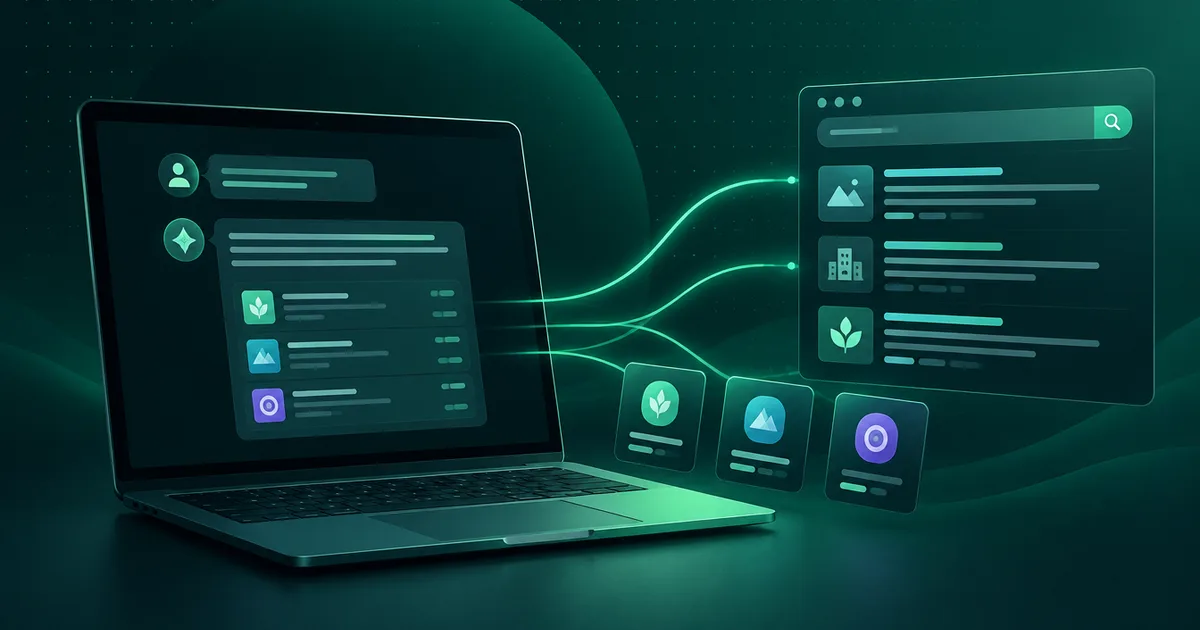
The ad is shown below the answer, visually separated from it. It contains the advertiser’s name, favicon, headline, description, image and destination URL.
The lengths are the interesting part:
| Element | Recommended length |
|---|---|
| Headline | ~16 characters |
| Description | ~32 characters |
Sixteen characters is “Website in 6 wks” and you are at the end. It is not a shortened Google Ads ad, it is a different discipline — closer to a product name than to ad copy. OpenAI also recommends not using a logo as the main visual, but a product or lifestyle photo.
How targeting works without keywords
Instead of keywords you set context hints — sentences describing the topics of conversations you want to appear in. The model then matches the ad based on the topic of the conversation, the content of the landing page and the text of the ad itself. Selection runs as a second-price auction weighted by relevance.
On top of that came custom audiences, geographic targeting and platform targeting (iOS, Android, web). Campaigns can be built for reach (CPM), for traffic (CPC) and for conversions. OpenAI itself sums it up on its advertiser page with the sentence “go beyond keywords with richer context signals” — meaning that a conversation holds more context than two words in a search engine.
An important limitation applies to Europe: personalised advertising does not yet run in the European Economic Area and Switzerland. Ad selection is based on the topic of the current conversation, approximate location and device type. From a privacy point of view that is good news. From a performance point of view it means fewer levers.
How much does advertising in ChatGPT cost?
The price of advertising in ChatGPT is set by a second-price auction weighted by relevance. The minimum campaign budget for euro accounts is €15 a day, i.e. €450 a month. Media and advertisers reported a CPM of around USD 60 at launch and from approximately USD 25 in April 2026. For CPC campaigns OpenAI recommends starting with a maximum bid of USD 3 to 5.
Publicly documented figures:
| Item | Value |
|---|---|
| Reported CPM at launch | ~USD 60 / 1,000 impressions |
| Reported CPM, April 2026 | from ~USD 25 / 1,000 impressions |
| Recommended starting maximum bid for CPC | USD 3–5 |
| Minimum budget, January 2026 | USD 250,000 |
| Minimum budget, April 2026 | USD 50,000 |
| Daily minimum per campaign, euro accounts | EUR 15 |
Two things about that table, because they are commonly twisted.
The CPM figures are not a price list. They are values reported by media and advertisers, not OpenAI’s rate card. ChatGPT Ads run on an auction weighted by relevance — second price, with the weight being the ad’s relevance to the conversation. An ad that fits better pays less for the same spot.
Three to five dollars is not the price per click. It is the recommended maximum bid that OpenAI itself advises starting with for CPC campaigns. What you actually pay is decided by the auction.
The last item matters most. The large minimums were an entry ticket for brands with media budgets. Today the minimum per campaign for euro accounts is €15 a day, i.e. €450 a month — an amount even a small company can afford. Of the whole table, that is the only figure with practical significance for a Slovak advertiser.
Measurement has gaps
The pixel and the Conversions API work, and impressions, clicks, spend, CTR, average CPC and CPM and conversions are available. Since July 2026 also app attribution via AppsFlyer and Adjust.
At the same time, you can target three platforms, but reporting has only two categories — mobile and desktop — so mobile web falls under mobile and iOS cannot be told apart from Android. OpenAI promises more detailed reporting without a date. Criticism from buyers is documented and persistent.
What follows from this
Three things.
First, it is a cheap experiment, not a replacement for Google. Fifteen euros a day means the channel can be tried for low hundreds of euros a month. Testing for three months with a small budget makes sense. Moving your performance budget there does not — and do not count on getting a CPM of twenty-five dollars, because that was a reported value from the spring, not a promise.
Second, advertising will not replace AI visibility. An ad is a paid spot below the answer. Whether ChatGPT mentions you in the answer itself is different work and cannot be bought. Whoever does both appears twice — and the cheaper of the two is the one you do not pay per click for.
Third, a large part of the work is in sixteen characters. With a format like that, what decides is the offer and how it is named, not the account structure. That is good news for companies with a clear offer and bad news for those without one.
If you are considering whether to try it, see how we do it — or write to us and we will tell you straight whether it makes sense in your case.
Sources
- OpenAI — ads.openai.com, the official page for advertisers and entry to Ads Manager
- OpenAI Help Center — Ads Manager availability by country (English original; localised versions lag behind)
- OpenAI Help Center — setting up campaigns and minimum budgets
- OpenAI, 31 Aug 2026 — ChatGPT Ads expanding across Europe
- PPC Land, 5 May 2026 — ChatGPT Ads Manager, CPC bidding, format and rates
- PPC Land, 30 Aug 2026 — expansion to 41 markets, plans, EEA and personalisation
- PPC Land — targeting three platforms versus two reporting categories
- Svetapple.sk, 20 Aug 2026 — expansion to Europe and the missing list of countries